When Korean dramas arrive on Netflix, Hulu, or other streaming platforms, they come with subtitles, sometimes also with English dubbing . The choice isn’t random. Understanding what determines whether you’ll read or hear your favorite K-drama in English reveals how streaming services balance authenticity, audience reach, and production costs.
Why Subtitles Became the Standard for Korean Dramas
Subtitles have always been part of how K-dramas travel internationally. Long before Netflix and global streaming services existed, international fans watched Korean shows with text on the screen because there was no other option. Over time, that became the norm. Viewers grew accustomed to hearing the actors’ real voices and reading along. For many dedicated fans, that is the authentic K-drama experience.
Even now, subtitles remain the most popular option because they keep performances intact. An actor’s voice carries emotion, rhythm, and cultural nuance that doesn’t always survive translation. In romantic or emotional scenes — the backbone of many Korean dramas — that authenticity matters deeply. Subtitles let the story stay close to its original form while preserving the performances that made these shows beloved in the first place.
The global success of shows like Squid Games prove that international audiences cna be won more easily with dubbed programmes. The ability to be able to have a programme on in the background whilst doing other things has become a common way to watch television. Unfortunately, if you have to read the screen, you cant do anything else.
The general Romantic Comedy, 16 episode TV series have a lot of characters in them. Some that you may not find that interesting, but you still need to hear what they say for the plot.
How Dubbing Actually Works (And Why It’s Expensive)
Dubbing works differently from subtitles. It’s not just translation — it’s a full production process that requires significant resources. Scripts must be rewritten to match mouth movements and cultural context. Voice actors are cast for each character. Every episode is re-recorded in a studio, then mixed with the original soundtrack.
This process takes time and money. A single dubbed episode can cost thousands of dollars and require weeks of work. Because of these constraints, streaming platforms don’t dub everything. They choose carefully based on expected return on investment.
The technical challenges are substantial too. Dialogue must match the on-screen lip movements (called “lip sync”), which often means rewriting lines entirely. Cultural references need adaptation. Jokes that work in Korean might fall flat in English, requiring creative rewrites rather than literal translation.
What Streaming Platforms Consider When Choosing
Shows expected to reach a wide, casual audience are more likely to receive dubbing treatment. Action series, thrillers, and high-concept dramas are easier to watch without focusing intensely on dialogue. These are the shows platforms like Netflix use to pull in viewers who might not usually watch foreign-language content.
Genre plays a decisive role in this calculation. Romance and slice-of-life dramas rely heavily on tone, pauses, and cultural detail. Those elements are difficult to recreate in another language without losing essential meaning. That’s why romantic K-dramas like Hometown Cha-Cha-Cha typically launch with subtitles only. Fast-paced or visually driven shows like Sweet Home don’t lose as much when dubbed.
Audience habits matter too. Streaming services track viewing preferences by region and adjust language options accordingly. In some markets, viewers expect dubbing as the default. In others, particularly in Asian countries and among established K-drama fan communities, subtitles are completely normal and often preferred.
The Role of Timing and Release Strategy
Timing is another critical factor that often determines the initial language options. Many Korean dramas release weekly, staying close to their original Korean broadcast schedule. Subtitles can be prepared quickly — often within hours of the original broadcast. Professional dubbing can’t match that speed.
If a show becomes unexpectedly popular, a dubbed version may be added weeks or months later — but rarely at the start. This is why breakout hits like Extraordinary Attorney Woo launched with subtitles but received dubbed versions after proving their global appeal.
The rise of simultaneous global releases has made dubbing even more challenging. When platforms want to release K-dramas worldwide on the same day as the Korean premiere, subtitles are often the only viable option to meet deadlines.
Budget Allocation and Platform Strategy
Streaming platforms allocate dubbing budgets strategically. A high-profile release with A-list Korean actors and significant marketing spend is more likely to receive multi-language dubbing. Shows produced specifically for international markets often have dubbing built into their production budgets from the start.
Regional variations also exist. A K-drama might be dubbed into Spanish, Portuguese, and French for Latin American and European markets while remaining subtitle-only in English-speaking regions where K-drama fandoms are more established and prefer original audio.
Why Both Options Will Continue to Coexist
While dubbing is becoming more common as Korean content reaches mainstream audiences, subtitles aren’t going anywhere. They’re faster to produce, significantly cheaper, and strongly preferred by established K-drama fans who value authenticity.
Dubbed versions help shows reach new viewers who might otherwise skip foreign-language content. Subtitles keep longtime viewers happy and preserve the performances that made Korean dramas special in the first place.
The ideal scenario — offering both options from day one — is slowly becoming more common for major releases. As Korean content continues to grow in popularity and streaming budgets expand, more shows are receiving full multi-language treatment.
It should be noted that the most successful shows from Korea, normally have English dubbing as well as many other languages.
It is not uncommon for programmes to have dubbing in Chinese, Spanish and Portuguese long before they get English. On many occasions, English is not available.
Break out programmes such as Dynamite Kiss and Study Group, which were excellent series, did not have English subtitles and their overall viewership would definitely have suffered because of it.
Personally, I do prefer the dubbed ones. I’m lazy like many others and I have not been conditioned to read subtitles and see few foreign films, like the majority of people in the UK or US.
However, I will quite often watch a series in English and rewatch in Korean if it really grabbed me.
I do now have to watch a lot of Korean TV with subtitles because no dubbing is available and to be fair if it was terrible dubbing, I’d rather not have it. Some dubbing is so good you may not even realise it is dubbed unless you look carefully.
Yes, its great to hear the actor’s real voices but also some of the voices that are used for dubbing are wonderful to listen to also.
Some people hate dubbing, but then they have the option to watch in the original, more people would prefer to listen in their own language so in the future we should see more dubbed programmes.
You are more likely to find dubbed versions of original content, Netflix, Disney or Prime. For instance Spring Fever has just started running and has dubbing. Prime original.
Here is a list of programmes worth watching that have English dubbing. IN NO PARTICULAR ORDER. (many more may have Spanish/Chinese and Portuguese.)
Most people have been awakened to Korean TV through Squid Games without even realising as it was dubbed. It is an excellent introduction but also rather graphic. If you would like to try a comedy or good CDR (Comedy/drama/romance) try one marked * These do not have the cringe factor that afflicts a lot of the Korean TV series.
HOSPITAL PLAYLIST
UNDER THE QUEENS UMBRELLA
STRONG GIRL NAM SOON
MR PLANKTON
BEYOND THE BAR* Legal drama.
EXTRAORDINARY ATTORNEY WOO* Legal drama with little romance.
BLOODHOUNDS
TRIGGER
MERCY FOR NONE* (hard hitting drama thriller)
GENIE MAKE A WISH
ALCHEMY OF SOULS* (S1 AND S2) * (CDR) Comedy, drama, romance. Period. Fantasy.
THE KINGS AFFECTION* (CDR) Period.
WEAK HERO
BON APPETIT YOUR MAJESTY* This one is for you if you like cooking. Romantic comedy with little drama.
HOMETOWN CHA CHA CHA* (Comedy, romance) Likeable series
BUSINESS PROPOSAL* Romantic Comedy
SQUID GAMES* – Not much comedy but plenty of drama. Violent and bloody.
VINCENZO – Drama/action with some comedy.
THE GLORY * Drama – hard-hitting – scenes of bullying.
QUEEN OF TEARS** CDR. It has everything and excellent performances, fantastic storyline and not disappointments.
SWEET HOME* Zombie outbreak surrounding appartment block. Drama/action (3 seasons)
ALL OF US ARE DEAD * Very popular high school zombie drama/action
HELLBOUND
RESIDENTS PLAYBOOK* Hospital based Comedy / Drama
There are over 70 on Netflix which has its own category of dubbed KTV to make it easier to find them.
Ready to take a look at one of the best subtitled ones?
Destined With You.* CDR – Rowoon and Jo Bo-ah. Episode one sets the scene and is a little bit slapsticky but after that it becomes one of the most rewatchable KTV series ever.

My Demon* Romantic comedy with some drama, action / fantasy. Song Kang and Kim You-jung
Very watchable leads in exciting, interesting story of a demon that falls in love with a human.

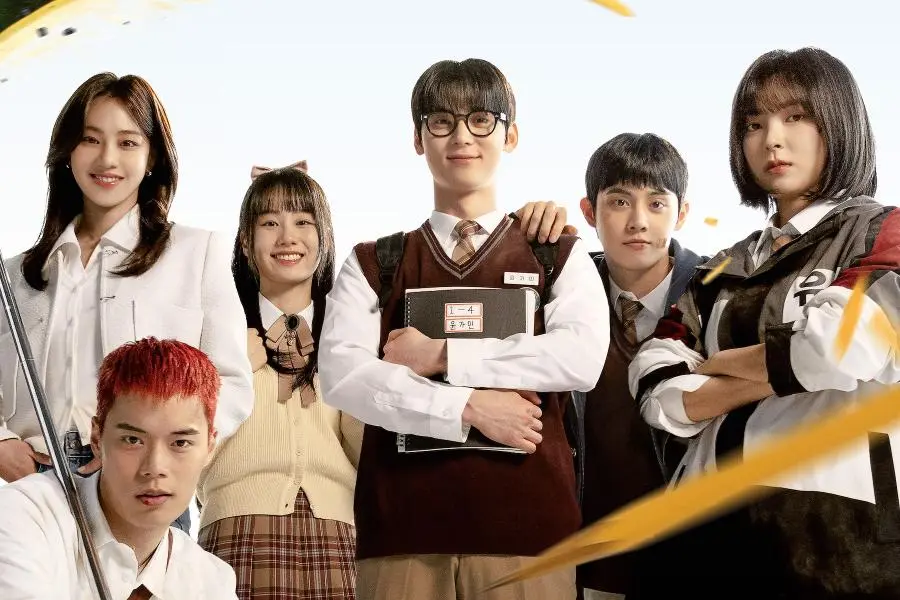
Study Group* (2025) Hwang Min-Hyun (Also Seo Yul in Alchemy of souls) leading a fantastic high school based comedy. Action in the way of plenty of fighting. Not romantic but the essence is there. The story of a student who just wants to study. (But isn’t very good at it) Some drama but this programme keeps firmly in its comedy genre without being slapstick.
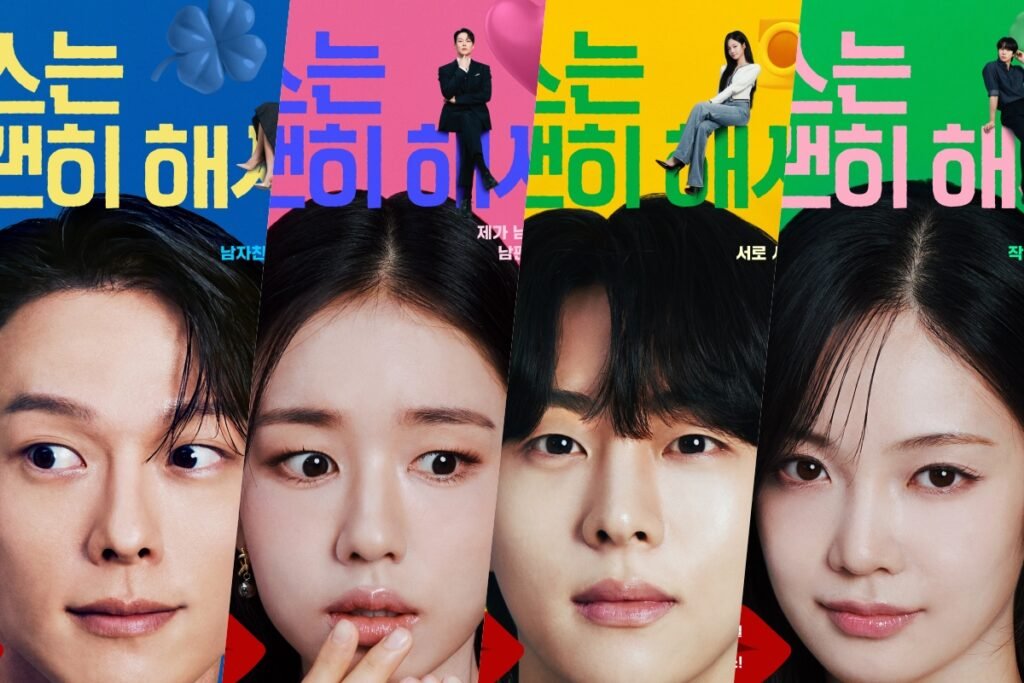
Dynamite Kiss* Easy going, passionate, romantic comedy. Small amount of drama. Great chemistry between the leads Jang Ki-Yong and Ahn Eun-Jin The title doesnt do it any favours or most of the last episode (end is still good) but ignoring those it is unmissable.